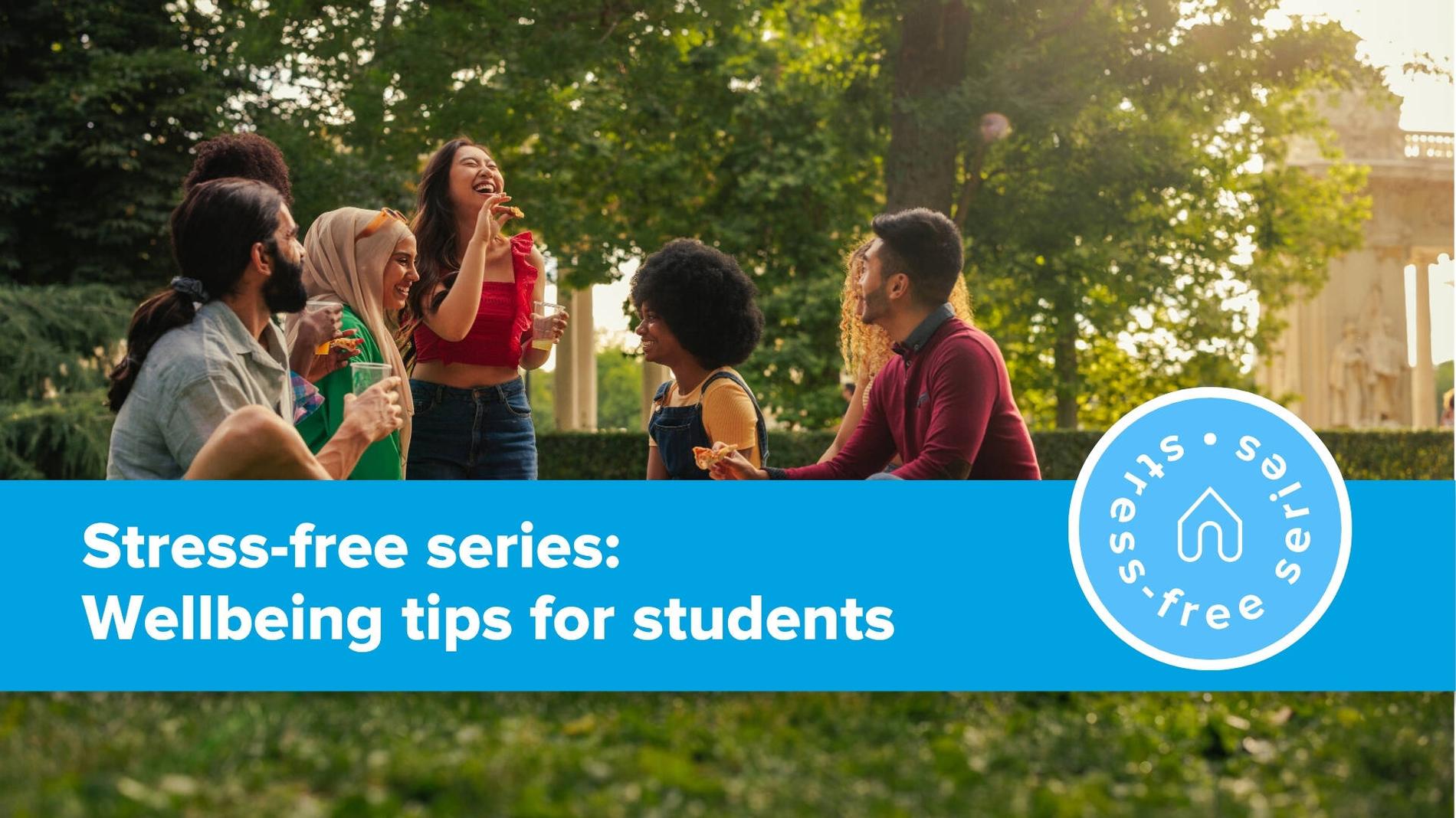
Stress-free Series: Wellbeing Tips for Students at University

Vic
01 June 2026 • 8 min read
About the author: I’m Vic, an SEO Content Executive at UniHomes, and I have been writing about student life and a range of other topics for over six years. As a graduate of both Lancaster University and the University of Leeds, I’m passionate about helping students make the most of their everyday lives!
This post is part of our Stress-free Series, designed to tackle those typical student pain points, so you can start to remove everyday chaos. Whether you’re up to your eyeballs in life admin or struggling to get back on budget, we’ve got you covered.
This one’s all about wellbeing tips for students. At university, there’s always something happening, something to do, and something to work on...
As exciting and amazing as all this can be, it can also be challenging, too. For some, it’s a time that can be plagued by feelings of self-doubt or worrying about grades, finances, exams, assignments, friendships, and more.
Everyone’s university experience is different. To help you protect your wellbeing and make the absolute most of your time here, I’ve put together some top tips for looking after yourself at uni.
–
Wellbeing tips for students
1. Talk
Recognising that you’re struggling is already a big step - after all, you’re meant to be having the time of your life, aren’t you?
If this is how you feel, you’re not alone. In fact, in a recent report by Student Minds, around 1 in 4 students report having a diagnosed mental health issue at university, while the National Union of Students (NUS) found that 37% of students have actually considered leaving their studies altogether due to poor mental health.
If you are finding it all a bit overwhelming, it’s okay. One thing you should note is that others are feeling and worrying about the exact same things. So, what can you do? The best thing is to talk.
You may shudder at the thought, but speaking out is often the first step to feeling better and can be liberating in itself. Talk to someone you trust, like:
- A close housemate
- A coursemate
- A family member
- A friend from home
You never know, they may feel the same or have experienced the same thing you’re going through. Or, if you’d prefer a less familiar face, speak to your university support services, your GP, confidential helplines like Student Minds’ Student Space, Samaritans, or Mind. Whoever you feel most comfortable opening up to, the main thing is to talk.
2. Get moving
With your hectic schedule, between your uni work and your day-to-day food shops, laundry, society sessions, and cooking, it can be tricky to find the motivation or time for an epic gym session whilst trying to put on a brave face too.
Staying active is positive both physically and mentally, giving you a healthy boost of endorphins to lift your self-esteem, while increasing dopamine and serotonin levels that also help with motivation and mood.
As it’s beginning to stay lighter for longer, with temperatures starting to rise it’s a perfect time to get outside and get active. Whether you go for a walk, jog or to the gym, any exercise will help - and give your vitamin D levels a nice lift.
The more regularly you can get active, the better you’ll feel. Taking a walk at lunchtime would be a good place to start, but you can also take inspiration from our Content Ambassadors:
3. Switch off with some me time
This isn’t always the easiest or most practical advice, but that’s what makes switching off and taking ‘me time’ all the more important. After all, you don’t want to get burnt out.
Do something you enjoy, relax, and get out of the student bubble... ultimately, give your brain a rest. Trust me, you don’t need to focus all the time, and you certainly can do without all the pressure you’re potentially piling on yourself.
Instead, make a schedule with plenty of time to switch off, relax and recharge doing something you enjoy, whether this is having a home spa day or reading a new book. Most importantly, stick to it.
–
4. Sleep!
Everyone needs a good night’s sleep. Again, it’s probably something you’ve heard millions of times, but sleep really is important, and the benefits certainly aren’t to be laughed at.
According to the Sleep Foundation, we need a minimum of seven hours of sleep each night so that our body has the time to repair and maintain processes that affect almost everything. This includes:
- Improving energy levels
- Regulating blood sugar
- Decreasing blood pressure
- Improving mental function
- Relieving stress
- Restoring your immune system
- Maintaining a healthy weight
What does a lack of sleep do? Literally the opposite. It can be seriously damaging mentally and physically, leading to poor concentration, higher blood pressure, and tiredness. It can also lower your mood as well as your ability to manage stress.
What can you do? First things first, rearrange your bedroom so that it’s a calm and de-cluttered space, avoid the blue screen of your phone when you do go to bed (as it tricks your brain to think it’s still daytime), and try to avoid any caffeine, nicotine, or alcohol before bed, as all of them impact not only your ability to fall asleep but your quality of sleep too. Instead, relax, unwind, and get a good night’s rest. You’ll feel all the better for it.
5. Think about what you’re eating and drinking
Uni life is often about cheeky takeaways and nights out. And it’s easy to get caught up in it all, with trusty fast-food apps on hand and the peer pressure to have one more pint at the pub.
Unfortunately, there’s a correlation between mood and diet, so this can easily become a vicious circle. We’re all aware of the long and short-term effects alcohol can have. Any positivity you may feel because of alcohol will certainly only be temporary, as it’s also a depressant that can have various negative impacts on your mental and physical health.
This doesn’t mean you have to go on a strict diet - simply don’t overindulge and know your limits.
6. Take time offline
Another daily habit that can actually lead to low mood, FOMO, and anxiety, is scrolling through your social media feeds.
It’s something we’re all guilty of - we often find ourselves sucked into the void of reels of our favourite influencers and friends... particularly as a procrastination tool or at night when we should be sleeping.
You may be entertained by it, but the reality is that you’re removing yourself from the present and looking at everyone else enjoying themselves, rather than making sure you are.
I’m not saying delete all your accounts and never go on social media again. Just set a limit and be mindful of checking out what everyone else is up to.
–
7. Get your life admin in order
Neglecting life admin is common when you feel like you're spinning more plates than you can count, but letting these chores build up can create a nagging sense of stress in the back of your mind.
Getting on top of these things is one of the quickest ways to help declutter your mental space. Blocking out a bit of time every week to do your cleaning, change your bed sheets, tackle your emails, and prep your weekly meals can help you get stuff done little by little - all without stressing out.
Access free 24/7 wellbeing support
At UniHomes, we know just how challenging life at uni can be. Not only do you have to manage your assignments, but you also have to find somewhere to live and manage your utility bills.
As we continue to open the doors to stress-free student living, we’ve partnered with Howden Insurance to provide all our student customers with access to free 24/7 wellbeing support via Howden for Students.
So, whether you find your perfect bills-included uni house on our website, or you’ve already found a property elsewhere and add our all-inclusive student utilities package to it, we’ll send you our unique UniHomes customer access link so that, should you need wellbeing support, you can access it immediately.
As a UniHomes customer, we want you to feel as supported as possible all year round, so that you can spend your time enjoying yourself and having the best uni experience you can. Look after yourself, take on our wellbeing tips for students, and remember, you’re not on your own.